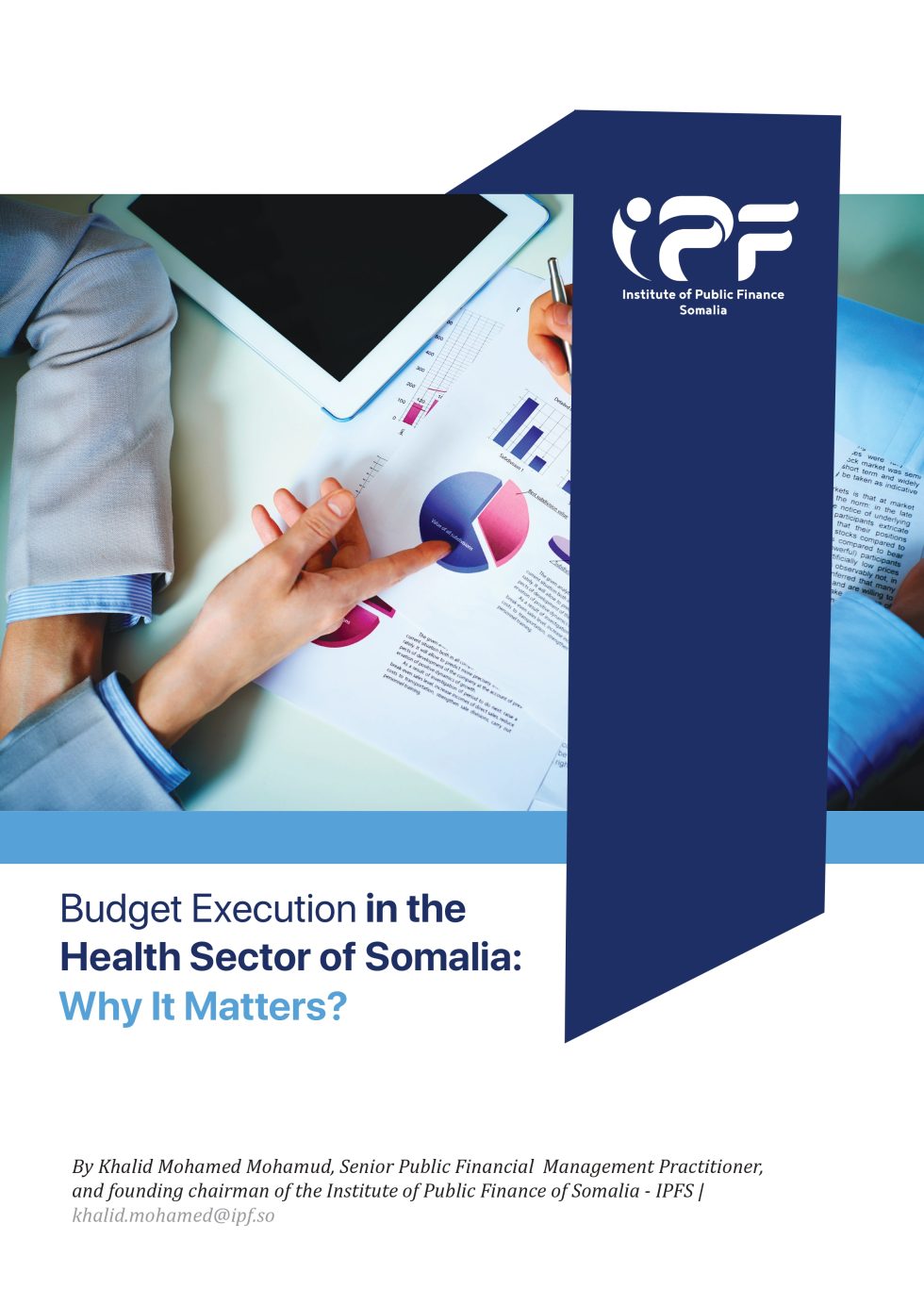
Budget Execution in the Health Sector of Somalia (2018–2024)
October 24, 2024·Khalid Mohamed Mohamud
Health Sector Budget Execution in Somalia
Overview
This report analyzes health sector budget allocations and their impact on healthcare delivery in Somalia.
Although government funding for the health sector has increased significantly, challenges remain in utilizing allocated resources efficiently. Weak budget execution continues to affect healthcare outcomes and delays critical investments in the sector.
Key Insights
Health Budget Growth
Health sector budget allocations increased substantially over the review period:
- 2018: $1.4 million
- 2022: $58.6 million
This demonstrates a strong commitment to increasing investment in the health sector.
Budget Utilization Challenges
Despite higher budget allocations:
- Only 19% of allocated health funds were spent in 2022.
- Budget execution rates continue to fluctuate from year to year.
- Large portions of approved budgets remain unutilized.
Impact on Healthcare Delivery
Poor budget execution has resulted in:
- Delayed healthcare investments.
- Slow implementation of health programs.
- Limited improvements in maternal health services.
- Reduced access to child healthcare.
- Delays in expanding healthcare infrastructure.
Why It Matters
Effective budget execution is essential because it:
- Improves access to quality healthcare services.
- Increases the efficiency of public spending.
- Strengthens financial accountability.
- Builds confidence among development partners and donors.
- Supports better health outcomes for citizens.
The report also highlights the importance of adopting Results-Based Financing (RBF) to improve financial performance and service delivery.
Key Recommendations
1. Increase Health Sector Investment
- Align health sector financing with the Abuja Declaration target of allocating 15% of the national budget to health.
- Prioritize sustainable domestic financing for healthcare.
2. Strengthen Institutional Capacity
Improve government capacity through:
- Better financial management.
- Stronger planning systems.
- Enhanced procurement processes.
- Improved budget execution mechanisms.
3. Improve Transparency and Accountability
Strengthen governance by:
- Enhancing financial reporting.
- Increasing public accountability.
- Improving monitoring and evaluation.
- Strengthening audit and oversight systems.
Greater transparency will help attract and sustain donor support.
Conclusion
Somalia has made significant progress by increasing health sector budget allocations. However, improving budget execution remains essential to ensure that financial resources translate into better healthcare services and improved health outcomes.
Strengthening financial governance, institutional capacity, procurement systems, and adopting Results-Based Financing (RBF) will help maximize the impact of health investments and support a more resilient healthcare system.
📥 Download the Full Report
Budget Execution in the Health Sector of Somalia